The Quiet Chemistry of a Humble Herb
Posted: Mon Feb 02, 2026 8:33 pm
In the vast global catalog of botanical extracts, few have seen their star rise as steadily across such diverse industries as Centella asiatica. Known also as Gotu Kola, this unassuming marsh plant is a cornerstone of traditional medicine from Ayurveda to Southeast Asian folk practice. Yet, the modern commercial story is not one of mystique, but of meticulous standardization. For formulators in the world's skincare and supplement labs, securing a reliable supply of its active power—the total triterpenes —increasingly means engaging with a highly technical, bulk-scale extraction industry centered in China. This is a trade built not on folklore, but on the precise quantification of asiaticoside, madecassoside, and their related acids.
China’s pivotal role in this supply chain stems from a powerful combination of agricultural coordination and industrial chemistry. While the plant thrives across Asia’s wetlands, consistent, contaminant-free cultivation in the volumes required by global brands is a specific agricultural challenge. Chinese producers have systematically addressed this, establishing dedicated cultivation bases, often in Yunnan or Guangxi provinces, and contracting with farming collectives. This control over the raw herb’s first step—its growth, harvest, and initial drying—is the non-negotiable foundation. It ensures a steady pipeline of raw material into facilities where the true value is extracted: the complex of four primary triterpenoids that define the ingredient's efficacy.
The dialogue with a supplier is, therefore, a deeply technical one. The romantic names—"tiger grass," "the herb of longevity"—are absent from the product spec sheet. They are replaced by the stringent language of analytical chemistry and pharmacopeial standards. The entire transaction hinges on a few critical data points, verified by a certified HPLC report:
Total Triterpenes Content: This is the headline figure, expressing the combined percentage of asiaticoside, madecassoside, asiatic acid, and madecassic acid. Commercial extracts are commonly standardized to 10%, 20%, 40%, or higher totals.
Specific Triterpenoid Ratios: Beyond the total, advanced applications demand specific profiles. A skincare formulator may seek an extract with a higher ratio of asiatic acid and madecassic acid (the aglycones), prized for their direct activity in collagen synthesis and wound healing. A supplement brand might prioritize a balanced, full-spectrum profile.
The Mandatory Certificate of Analysis (CoA): This document is the extract's passport. It must confirm the potency claim and, with equal importance, certify the absence of heavy metals, pesticide residues, aflatoxins, and unsafe solvent levels to meet the strict standards of the EU Cosmetics Regulation or FDA GRAS assessments.
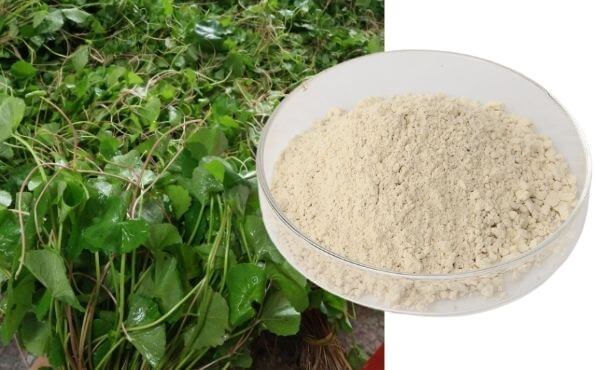
This is commerce in its most functional form. Buyers are R&D chemists for cosmetic giants developing anti-aging serums or barrier-repair creams, and supplement brands formulating cognitive or venous support products. They purchase in quantities ranging from 1-kilogram samples for stability testing to multi-hundred-kilo production runs. The product is a fine, hygroscopic brownish powder with a characteristically bitter taste, packaged in double-sealed, desiccant-filled aluminum bags to protect its stability. Its journey from a humid field to a temperature-controlled manufacturing suite is complete.
Navigating the supplier landscape for this ingredient requires a clear understanding of one’s own compliance needs. The market is efficiently stratified. At the top are GMP-certified, vertically integrated manufacturers whose clients are multinational pharmaceutical and cosmeceutical corporations. They offer full traceability, comprehensive stability and compatibility studies, and dossiers prepared for global regulatory submissions. Their prices reflect this turnkey service. In parallel, a vibrant ecosystem of specialized extractors and trading companies offers competitively priced material that may meet basic CoA specifications. The risk for a brand here is less about fraud and more about the subtle inconsistencies in color, solubility, or exact triterpenoid ratio that can disrupt a meticulously calibrated final product.
The sustained demand for Centella asiatica extract is being driven by two powerful, parallel trends. In the skincare industry, the explosion of "skin barrier" and "sensitive skin" categories has made its clinically proven wound-healing, anti-inflammatory, and collagen-stimulating properties exceptionally valuable. It is a star ingredient in "clean" and "clinical" beauty alike. In the nutraceutical space, growing interest in natural nootropics and adaptogens has renewed focus on its traditional uses for cognitive function and circulatory health. Chinese suppliers are not creating these trends, but they are the essential, responsive engine that allows them to scale, providing the standardized, compliant raw material that global product developers require.
Ultimately, the story of wholesale Centella asiatica extract is one of quiet, industrial translation. The humble, fan-shaped leaf, once foraged from riverbanks, is now a cultivated crop, its complex chemistry meticulously mapped, isolated, and concentrated into a stable, shippable powder. This process, perfected at scale in China, allows a laboratory in Seoul, Zurich, or New Jersey to incorporate a piece of ancient herbal wisdom into a modern formulation with the same predictability as a synthetic compound. In this global trade, the herb's power is not diluted; it is precisely calibrated, proving that the most enduring natural remedies often find their most impactful modern role through the unglamorous, essential discipline of bulk supply.
China’s pivotal role in this supply chain stems from a powerful combination of agricultural coordination and industrial chemistry. While the plant thrives across Asia’s wetlands, consistent, contaminant-free cultivation in the volumes required by global brands is a specific agricultural challenge. Chinese producers have systematically addressed this, establishing dedicated cultivation bases, often in Yunnan or Guangxi provinces, and contracting with farming collectives. This control over the raw herb’s first step—its growth, harvest, and initial drying—is the non-negotiable foundation. It ensures a steady pipeline of raw material into facilities where the true value is extracted: the complex of four primary triterpenoids that define the ingredient's efficacy.
The dialogue with a supplier is, therefore, a deeply technical one. The romantic names—"tiger grass," "the herb of longevity"—are absent from the product spec sheet. They are replaced by the stringent language of analytical chemistry and pharmacopeial standards. The entire transaction hinges on a few critical data points, verified by a certified HPLC report:
Total Triterpenes Content: This is the headline figure, expressing the combined percentage of asiaticoside, madecassoside, asiatic acid, and madecassic acid. Commercial extracts are commonly standardized to 10%, 20%, 40%, or higher totals.
Specific Triterpenoid Ratios: Beyond the total, advanced applications demand specific profiles. A skincare formulator may seek an extract with a higher ratio of asiatic acid and madecassic acid (the aglycones), prized for their direct activity in collagen synthesis and wound healing. A supplement brand might prioritize a balanced, full-spectrum profile.
The Mandatory Certificate of Analysis (CoA): This document is the extract's passport. It must confirm the potency claim and, with equal importance, certify the absence of heavy metals, pesticide residues, aflatoxins, and unsafe solvent levels to meet the strict standards of the EU Cosmetics Regulation or FDA GRAS assessments.
This is commerce in its most functional form. Buyers are R&D chemists for cosmetic giants developing anti-aging serums or barrier-repair creams, and supplement brands formulating cognitive or venous support products. They purchase in quantities ranging from 1-kilogram samples for stability testing to multi-hundred-kilo production runs. The product is a fine, hygroscopic brownish powder with a characteristically bitter taste, packaged in double-sealed, desiccant-filled aluminum bags to protect its stability. Its journey from a humid field to a temperature-controlled manufacturing suite is complete.
Navigating the supplier landscape for this ingredient requires a clear understanding of one’s own compliance needs. The market is efficiently stratified. At the top are GMP-certified, vertically integrated manufacturers whose clients are multinational pharmaceutical and cosmeceutical corporations. They offer full traceability, comprehensive stability and compatibility studies, and dossiers prepared for global regulatory submissions. Their prices reflect this turnkey service. In parallel, a vibrant ecosystem of specialized extractors and trading companies offers competitively priced material that may meet basic CoA specifications. The risk for a brand here is less about fraud and more about the subtle inconsistencies in color, solubility, or exact triterpenoid ratio that can disrupt a meticulously calibrated final product.
The sustained demand for Centella asiatica extract is being driven by two powerful, parallel trends. In the skincare industry, the explosion of "skin barrier" and "sensitive skin" categories has made its clinically proven wound-healing, anti-inflammatory, and collagen-stimulating properties exceptionally valuable. It is a star ingredient in "clean" and "clinical" beauty alike. In the nutraceutical space, growing interest in natural nootropics and adaptogens has renewed focus on its traditional uses for cognitive function and circulatory health. Chinese suppliers are not creating these trends, but they are the essential, responsive engine that allows them to scale, providing the standardized, compliant raw material that global product developers require.
Ultimately, the story of wholesale Centella asiatica extract is one of quiet, industrial translation. The humble, fan-shaped leaf, once foraged from riverbanks, is now a cultivated crop, its complex chemistry meticulously mapped, isolated, and concentrated into a stable, shippable powder. This process, perfected at scale in China, allows a laboratory in Seoul, Zurich, or New Jersey to incorporate a piece of ancient herbal wisdom into a modern formulation with the same predictability as a synthetic compound. In this global trade, the herb's power is not diluted; it is precisely calibrated, proving that the most enduring natural remedies often find their most impactful modern role through the unglamorous, essential discipline of bulk supply.