The Anthocyanin Advantage
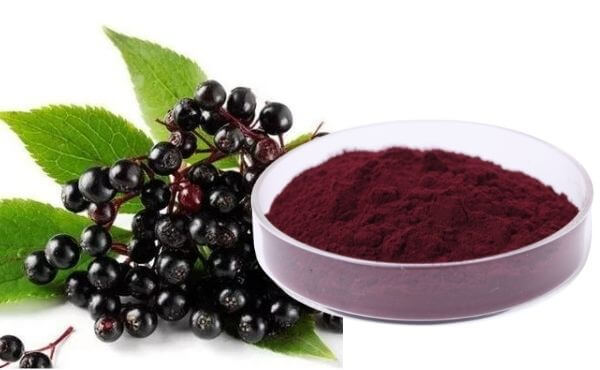
Elderberry extract is derived from the fruit of the Sambucus nigra (European elder) or Sambucus canadensis (American elder) tree . Its deep purple-black color is a direct result of its high anthocyanin content—plant pigments responsible for the vibrant hues in berries, cherries, and purple cabbage. In elderberries, anthocyanins account for approximately 80% of the total polyphenol content, making it one of the richest natural sources of these bioactive compounds .
Anthocyanins are valued for their significant antioxidant capacity . They act as strong free radical scavengers, neutralizing reactive oxygen and nitrogen species that can damage cells and contribute to chronic disease . Scientific literature describes multiple mechanisms behind this antioxidant effect, including direct scavenging and metal chelation . Beyond antioxidants, elderberry anthocyanins exhibit anti-inflammatory properties by inhibiting the production of pro-inflammatory cytokines, and they have demonstrated immunomodulatory effects .
China’s Role in the Supply Chain
China has established itself as a major player in the botanical extract market, and elderberry is no exception. Manufacturers across provinces like Shaanxi, Henan, and Hunan have developed sophisticated production capabilities to meet global demand .
Leading Chinese suppliers produce elderberry extract standardized to various anthocyanin levels, with common specifications ranging from 5% to 25% anthocyanidins . The product typically appears as a purple-red or dark-purple fine powder, with particle size of 80 mesh or finer .
Quality and Certifications
For a professional B2B buyer, quality assurance is paramount. Reputable Chinese suppliers offer detailed Certificates of Analysis (COA) that verify anthocyanin content via HPLC (High-Performance Liquid Chromatography) or UV methods . These documents confirm critical parameters such as:
Heavy Metals: Typically ≤10 ppm total, with lead ≤2 ppm and arsenic ≤1 ppm
Microbiological Safety: Negative for E. coli, Salmonella, and pesticide residues
Loss on Drying: Usually ≤5%
Suppliers often hold international certifications including ISO, HACCP, Kosher, and Halal , which facilitate compliance for brands exporting to regulated markets.
Applications and Market Demand
The functional food and supplement sector has embraced elderberry extract. Its applications span dietary supplements (capsules, tablets, powders), functional beverages, and even cosmetics and skincare products .
The color performance is pH-dependent, exhibiting red shades in acidic environments (yogurts, fruit beverages) and shifting toward blue or purple in more neutral or alkaline conditions . This makes elderberry a versatile natural colorant as well as a functional ingredient.
Consumer demand surged significantly in 2020, with elderberry supplement sales reaching $320 million according to an American Botanical Council report, largely driven by interest in immune support . This sustained consumer interest makes elderberry a strategic ingredient for brands looking to align with clean-label, science-backed formulations.
A Sourcing Strategy for Success
When evaluating Chinese suppliers, look for those who offer traceability, third-party testing, and technical support. Some suppliers maintain their own cultivation bases, ensuring quality control from the raw material stage . Others provide sample testing and custom packaging options to suit specific product needs .
For food manufacturers, supplement brands, and beverage innovators, China-sourced elderberry extract represents a reliable, cost-effective, and scientifically validated ingredient. Its deep purple promise is backed by both tradition and modern science.